Student Research
Our students are active in conducting research both in the classroom and across the world.
Senior Honors Theses
Zoe Frantz ’26
Contre l’abstraction : Albert Camus et la violence idéologique à l’époque contemporaine
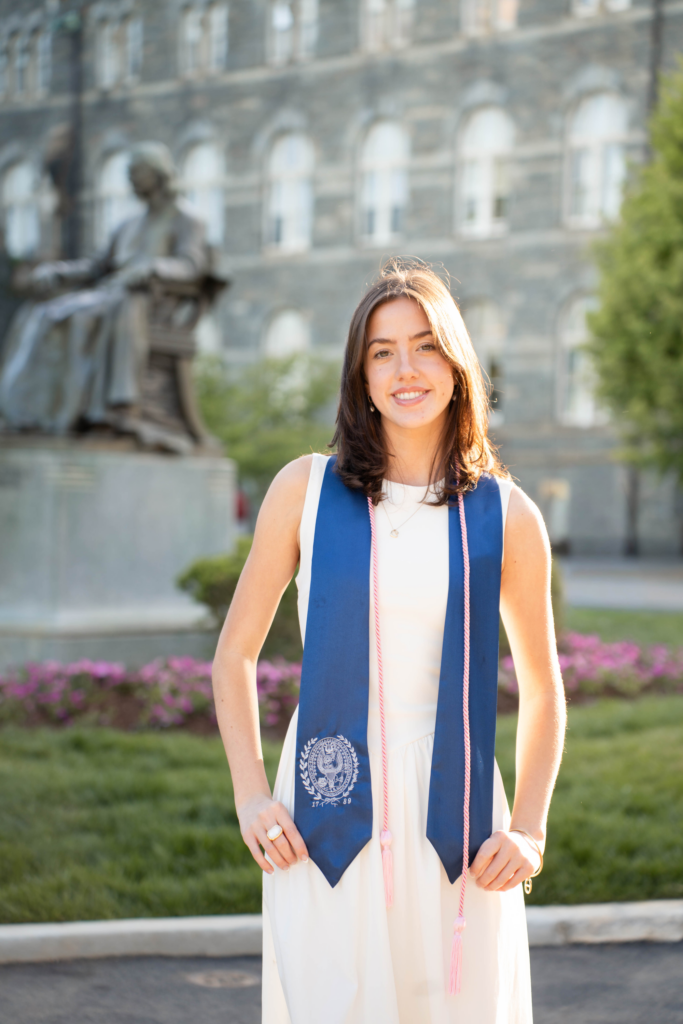
This thesis examines the contemporary relevance of Albert Camus’s critique of ideological violence, as he saw it in the twentieth century. Drawing on Camus’s philosophical and literary works, alongside thinkers such as Hannah Arendt and George Orwell, it proposes that modern political violence, symbolic and material, still exists in the context of processes of abstraction that distance individuals from human suffering and seemingly render violence acceptable. The first section develops a theoretical framework centered on Camus’s critiques of the simplification and lies ideologies rely on, the bureaucratization of violence, and moral desensitization. The second section applies this framework to contemporary phenomena, including the conspiracy theory of the “Great Replacement” and recent conflicts such as the wars in Ukraine and in Iran. These case studies highlight how fear, simplification, historical narratives, media discourse and language use, and digital imagery can be mobilized by ideological partisans and normalize violence. Ultimately, this thesis recognizes that the same ideological conflict seen in Camus’s times—from the death of his father in the First World War, to his experience during the Nazi occupation of France, to his critiques of the early Cold War world-wide polarization—bears striking similarities to contemporary political dynamics. Such continuities indicate that the forms of ideological violence Camus analyzed have not disappeared at all, but rather evolved.
Sofia Michalski ’26
Appel au dialogue: Camus, la pensée Chrétienne, et l’éthique de la responsabilité
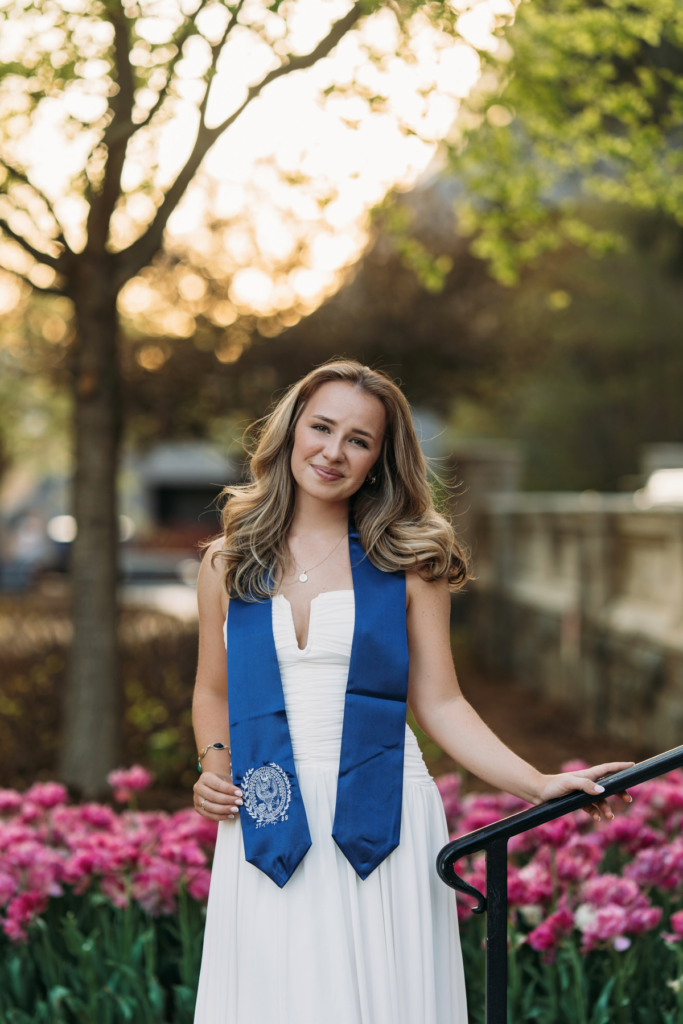
Why Dialogue? In January 2026, the World Economic Forum gathered heads of state in Davos under the theme “A Spirit of Dialogue,” in response to global polarization and the collapse of trust in our institutions (Eswaran). As a student of both the French language and economics, I believe that the question of dialogue — a central element of our social fabric — is too often overlooked.
Dialogue lies at the heart of Albert Camus’s work and his search for an ethics of responsibility. This thesis proposes Camus’s work as a dialogue with Christian thought and a continual call to dialogue as the authentic foundation of morality. Camus critiques the instrumentalization of fear and transcendence by Christian institutions of his time. However, his critique is not a mere refusal. The alternative to Christian morality that emerges in Camus’s work is grounded in the earthly world and transmitted through literary form rather than doctrine. Drawing from his novels (L’Étranger, La Peste), lyrical essays (Noces, L’Été), the short stories of L’Exil et le royaume, and political speeches and letters, this thesis traces four key elements of Camus’s ethics of responsibility: the critique of the institutional mechanisms of Christianity, myth as a literary form demanding the active participation of the reader, corporeal communion with the natural world, and revolt as both artistic testimony and everyday practice. The comparative analysis focuses on the Augustinian tradition and on the social teaching of Pope Francis in his encyclical Laudato Si’.
Contemporary moral crises, whether social or economic, demand authentic dialogue. Camus’s ethics offers a lasting resource for combating silence and recovering a path toward dialogue and responsibility.
Student Research Abroad
Carmela Cadja ● Spring 2026
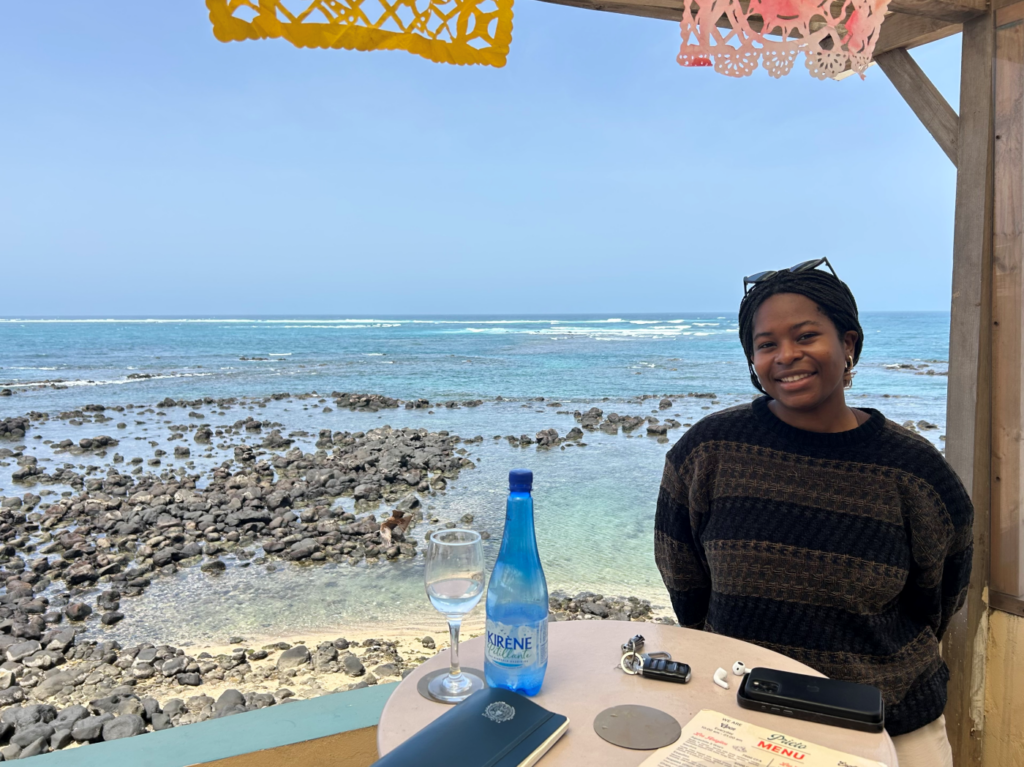
My name is Carmela Cadja (SFS ‘28), and I am from Burnsville, MN. I am a STIA major, pursuing a certificate in African Studies and a minor in Global Development Studies. During spring break, I embarked on a week-long research trip to Dakar, Senegal to conduct research through the Figge Fellowship on Senegalese laïcité. Introduced to my research topic through my Global Secularisms course, I researched Senegalese laïcité’s manifestation in two cases where prominent Catholic private schools attempted to ban students from wearing headscarves. These cases sparked significant controversy as Senegal is majority-Muslim and employs an accommodationist model of political secularism to protect religious freedoms. During my trip, I spoke with religious leaders and experts to understand the perspectives of Catholics and Muslims on the controversies and their perceptions of Senegalese laïcité, its role in society, and its future. I was fortunate to conduct interviews with Sister Marie Odile Kama, the Secretary of the National Office of Catholic Education in Senegal, Adama Ndiome, a consulate officer of Religious Affairs in the U.S. Embassy Dakar, and Philippe Tine, the president of Senegal’s National Laity Council. These conversations provided valuable insight to my research by illuminating contemporary interpretations of religious freedoms and institutional autonomy in Senegal which are absent from Western academia.
I would like to extend a warm thank you to Professor Le Guelte, Dr. Daniels, Professor Corcoran, and Professor Berlinerblau for their guidance during my research project. I would also like to thank the SFS Deans’ Fund and the McCarthy Fund for covering the expenses of my research trip.
Caring in Crisis Journée d’Études ● April 2026
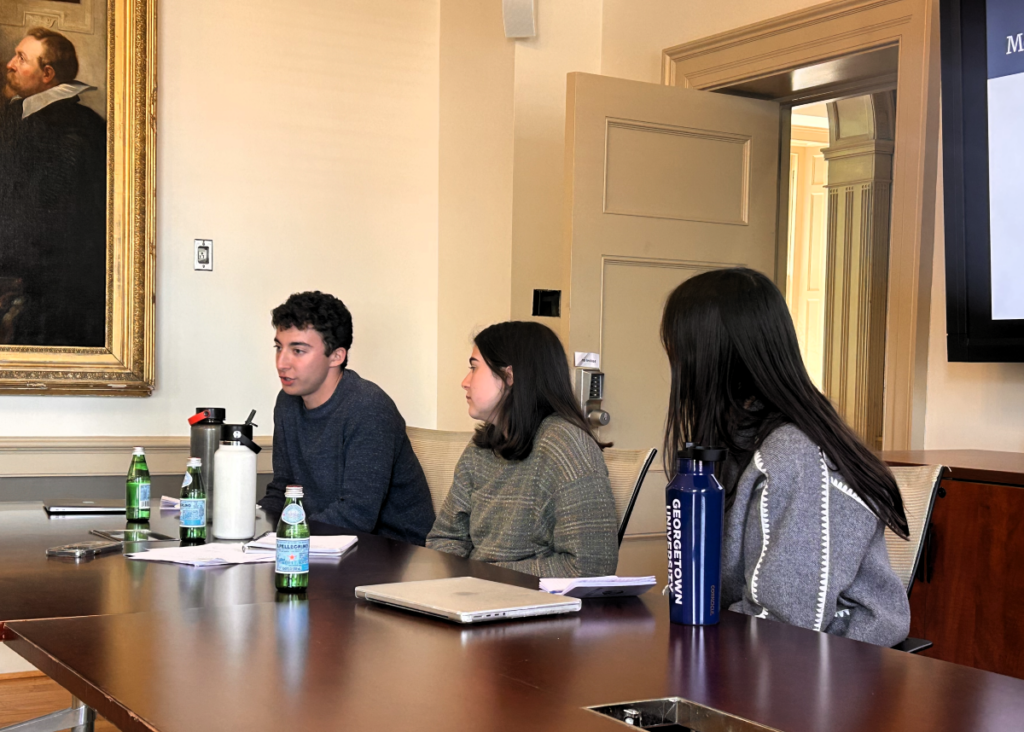
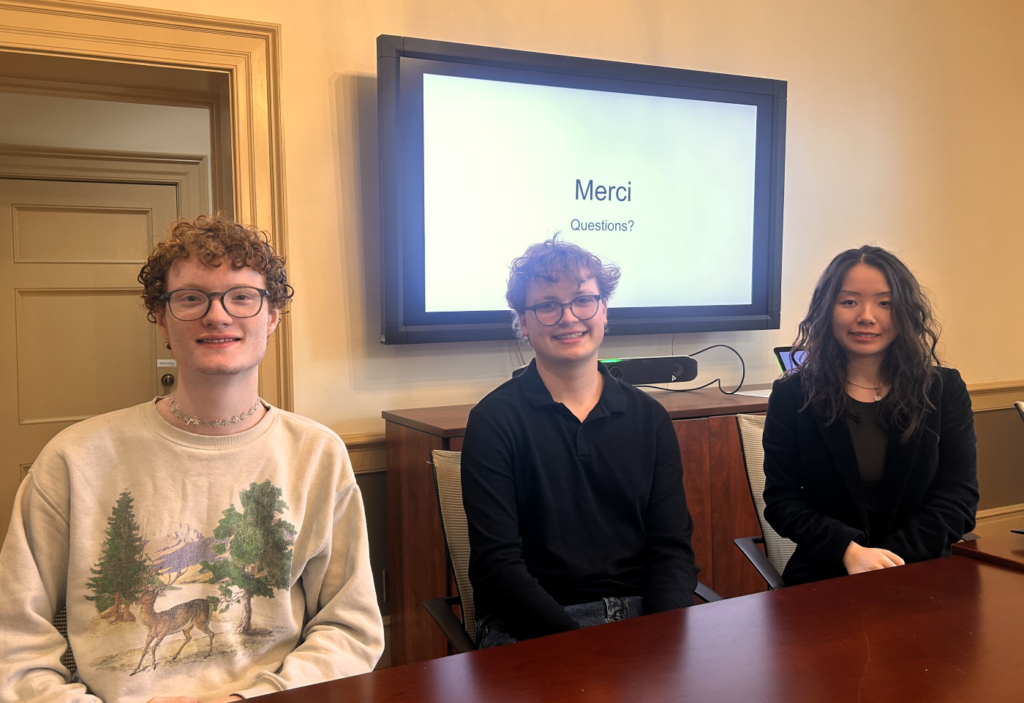
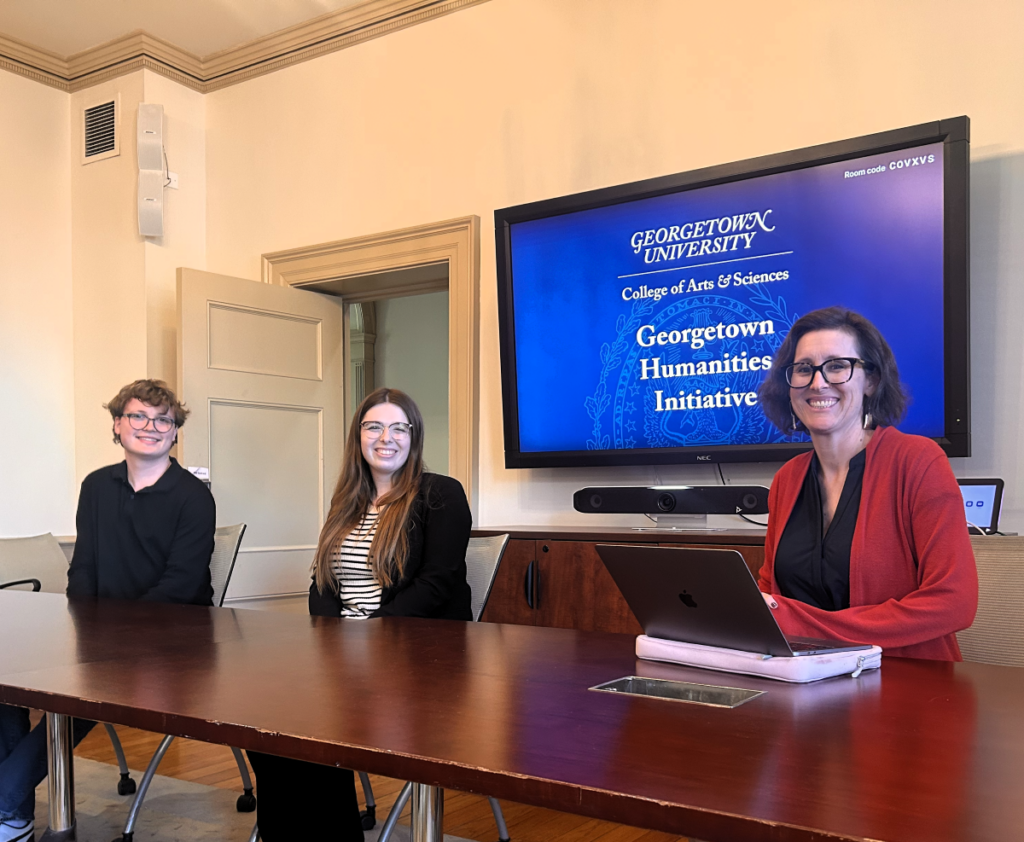
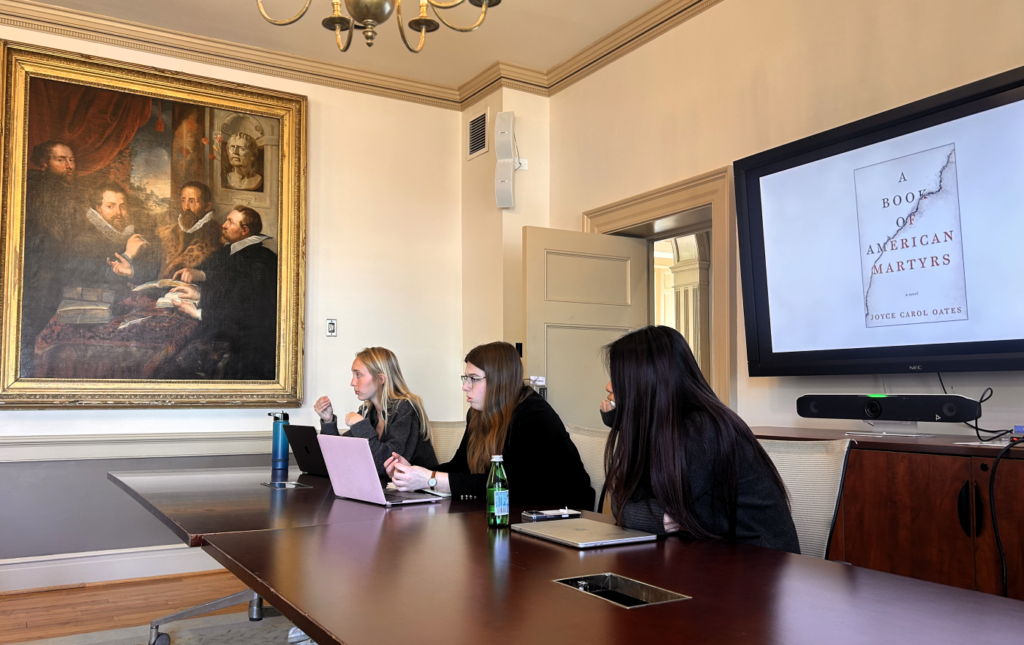
On Wednesday, April 22, 2026, students from the French course “Caring in Crisis” (FREN-4565), taught by Professor Jennifer Boum Make, presented their original, interdisciplinary research in the context of a one-day undergraduate conference. They explored a wide range of topics including the health care system in modern France, care in Colonial Vietnam, and the literature of Guadeloupe, among others. The discussions that followed each panel offered important engagement with the key questions of the course. The keynote lecture was delivered by Professor Loïc Bourdeau (Maynooth University), and a recent graduate of our program Brendan Teehan (CAS ’25) gave a career talk. View the full program for the event.